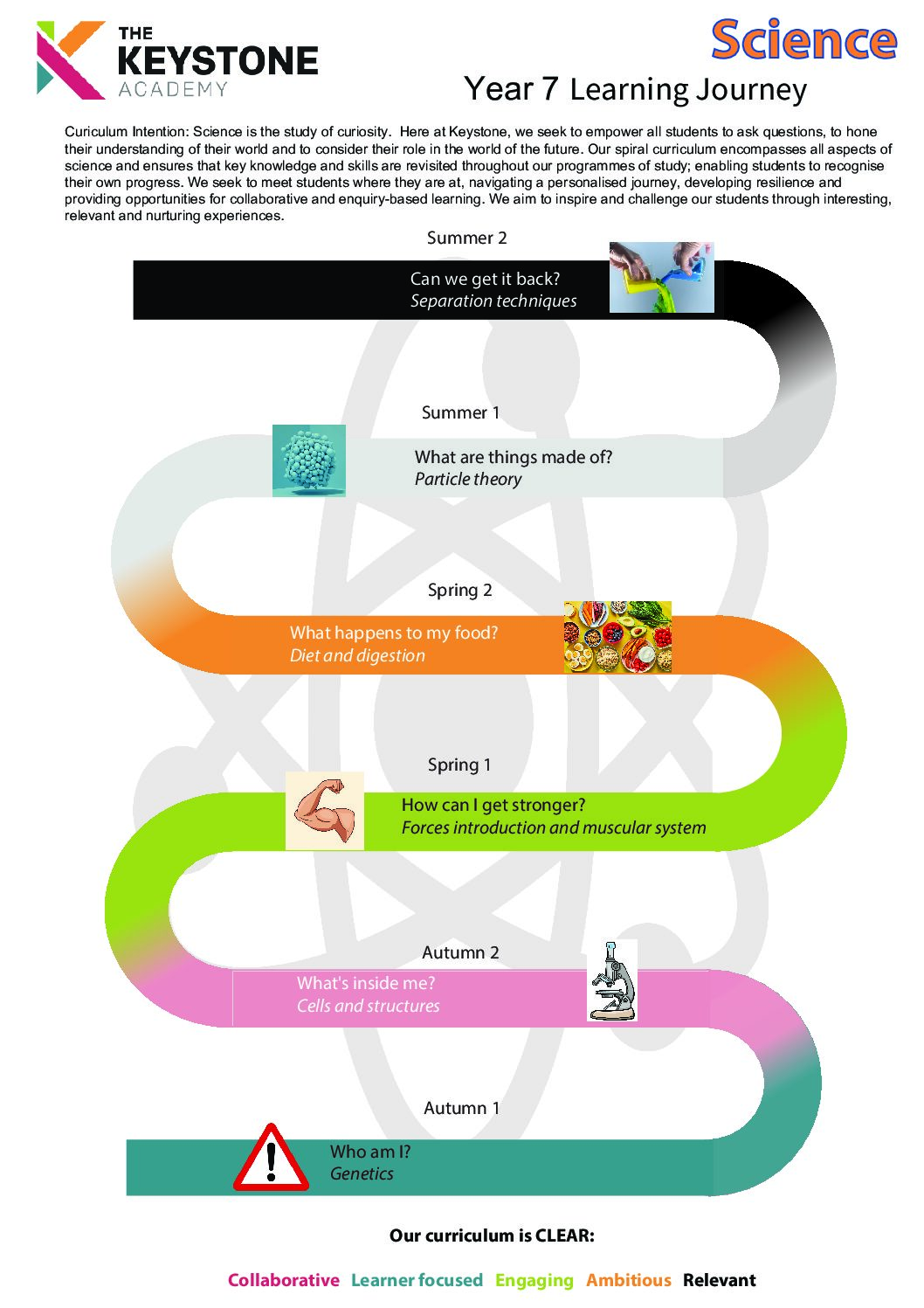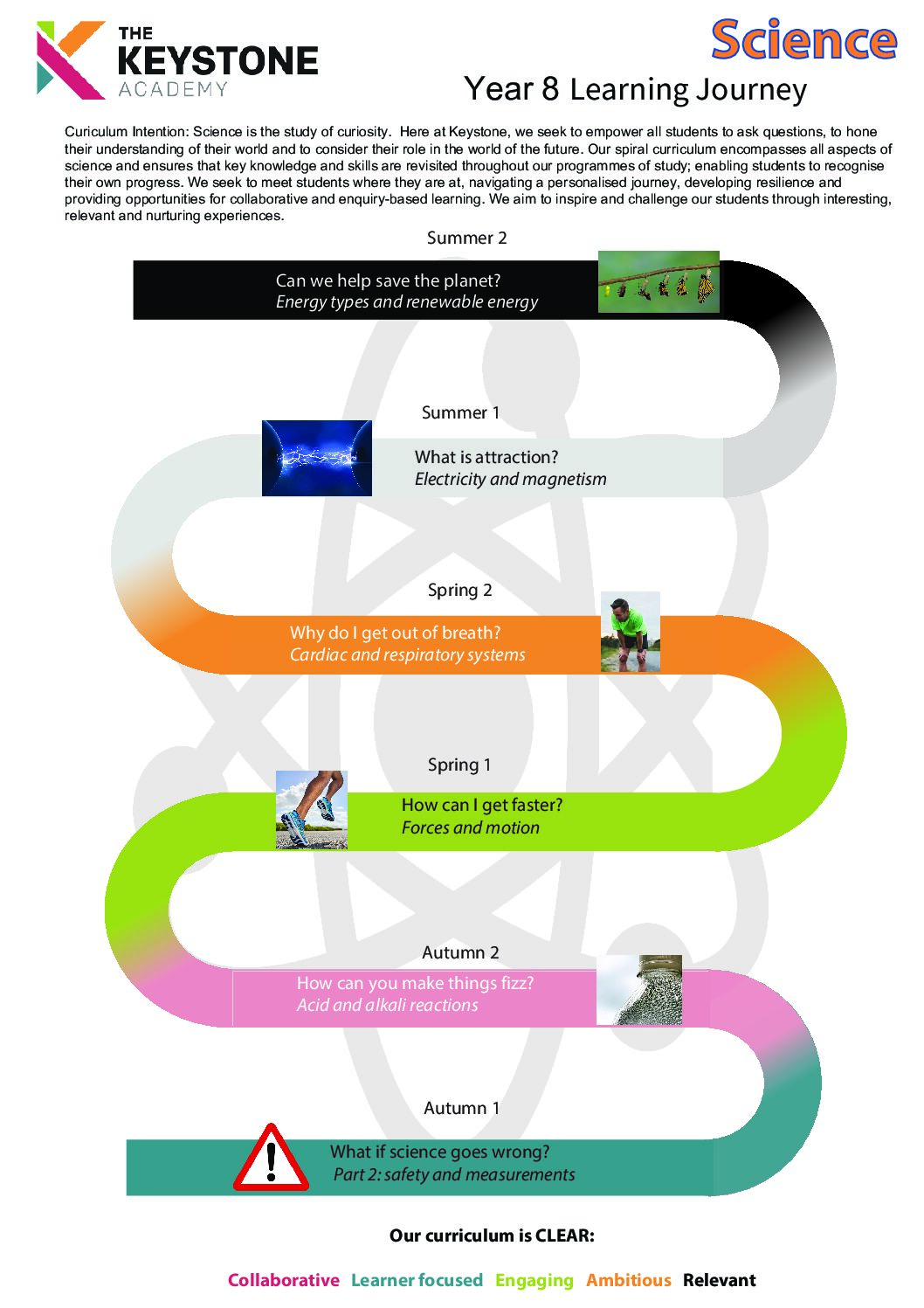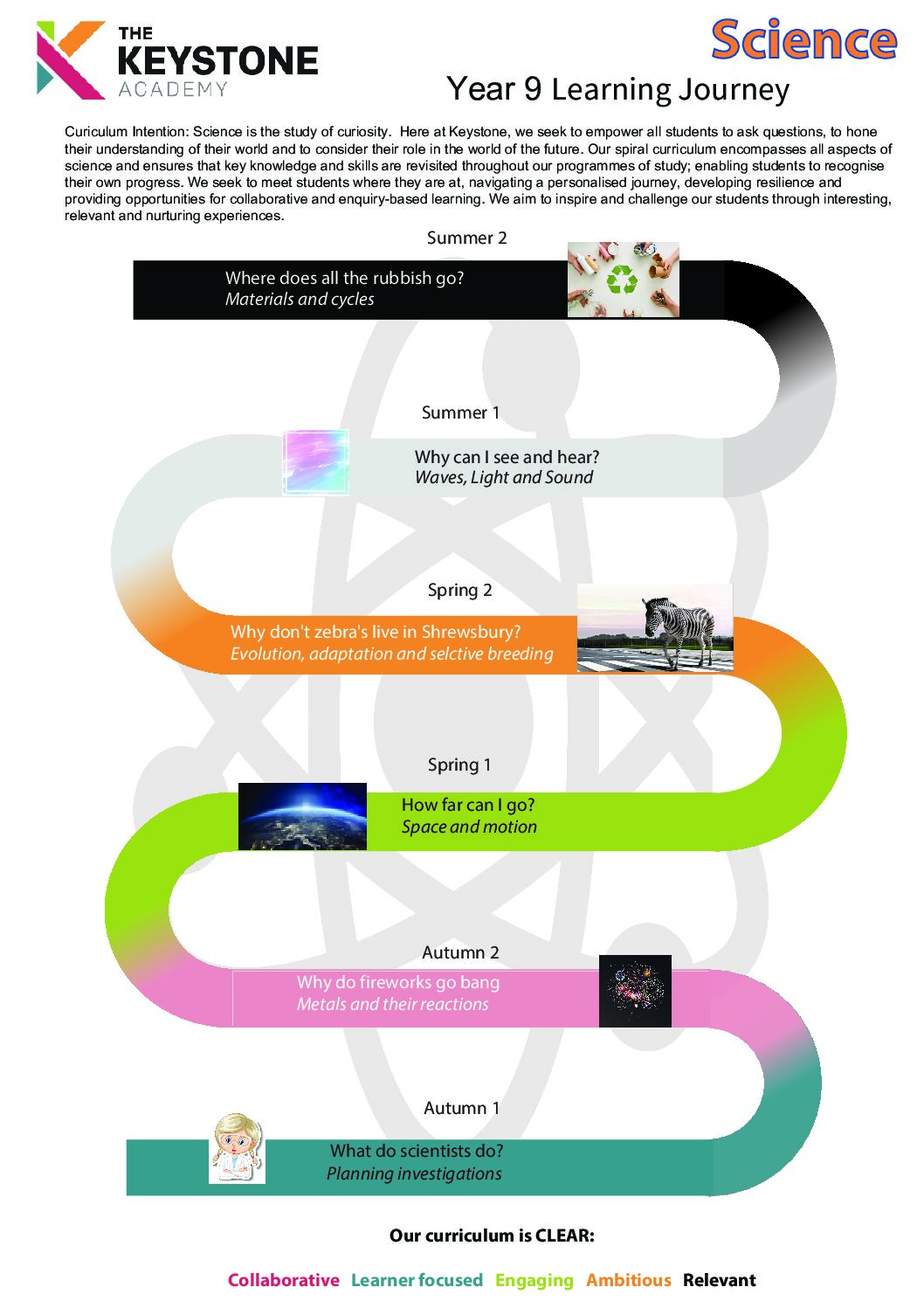
Inspiring confident learners to ask questions, be curious and seek to understand the natural world.
Science is taught as a spiral, through curriculum from EYFS to Y11. The curriculum is based on the main theoretical concepts of:
- Plants
- Animals, including Humans and the Human Body
- Habitats
- Everyday materials
- Forces and magnets
- Earth and Evolution
- Waves, Energy and Electricity
Teaching students to be curious, to ask questions and to seek answers is woven through all our lessons, ensuring science is delivered experientially and relevantly. We look for opportunities for students to investigate, to go outside and to see what they are learning in the real world, localising the curriculum at every opportunity. We build in time for students to become proficient at science skills. We also want students to be able to manage risk, not only in the science classroom but also in adulthood, so time is given to exploring and discussing risks. We acknowledge that the science curriculum is content-rich, and as a result we build in frequent and regular opportunities for spaced and interleaved retrieval.